
Mental framing for mentors - asking questions - week #2
In this segment, we would like to provide you some valuable techniques about how to ask good questions. Most people would think we learn to ask questions early on then naturally become better at it with age by trial and error. However since the 1970s, there has been a great deal of physiological, bio-chemical and psychological research-initiatives dedicated to explore brain activity when triggered by various types of questions. We would like to share some not so obvious, but certainly interesting findings you can also apply in your mentoring role or in your own life when trying to solve a difficult situation, or to sort out your own thoughts overcoming mental blocks.
In regard to your mentoring role - you can utilize questions for detection (how your mentoree stands on an issue emotionally, intellectually, or to figure out the kind of reasoning skills he/she applies when asking or answering a question.) When combined with improved listening-skills (attentiveness) your analytical abilities along with your EQ can also grow and expand.
Let's begin with explaining the role of open- and closed -ended questions first. When asking an open-ended question (e.g.: what did you do yesterday? - you let your mentoree explain on her own way what happened as oppose to a closed-ended question (e.g.: did you eat lunch at home? - that will most likely trigger a short answer schema: yes/no.) The goal of phrasing good question is obvious - to avoid misunderstandings, to stay on topic, to develop deeper understandings how your conversation-partner function. In terms of emotionality of questions we can see how various question words selectively engage different part of the brain (e.g.: the limbic brain or the neocortex.) This means when using questions conscientiously by this principle alone you can see (from the type of questions your partner proposes - how he/she approaches the topic of discussion) while gives you the chance to explore a given topic from an emotional or rational aspects as well.
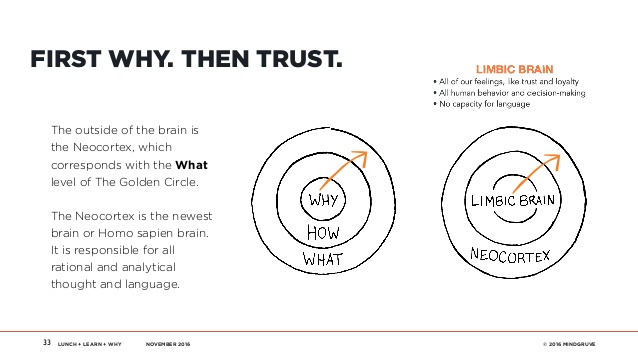
When it comes to assisting someone to adjust to a now environment, we must understand that it can either have emotional and rational content, but not in the same time. In order to help your mentoree opening up, we recommend you to first blend self-sharing (opening up) with neutral or rational type of questions (engaging the neocortex) by getting factual information presented, while as a peer-mentor you provide (the emotional content he/she can relate to) via statements/questions. Keep in mind when you ask a question that triggers the "emotional (limbic) brain" (questions with why/how) it takes a while until the brain returns to a "neutral" bio-chemical state.
Let's see an example! Mentor: "I was so nervous during my orientation week when I was in your place two years ago. I am really empathetic with all experiencing stress (like being flooded with tons of new info)" - "Are you managing it?" - (neutral) - if the answer (whatever that is) you receive carries mainly emotional content - you may want defiantly to reinsure/encourage your buddy with personal statements, and positive messages.
Another tip: try to be cautious with over-generalization (regardless if well intended) using words such as (everybody, nobody etc.) they make the speaker unauthentic and the conversation-partner disengaged. It is also wise to end each of your sessions (meetings with mentoree) with a clarifying question a few minutes before the end of your meeting such as: "is there anything that we discuss needs more clarification?" or "is there anything that is important for you to know/ask right now?" etc. This will give a chance to end a mentoring role on a positive note.
As time passes you can manage your sessions time-wise based on how many "unanswered questions" remain. Being thoughtful and sensitive are qualities mentors need to adapt when they are stepping into the mentoring-role. Keep in mind mentors tend to serve as outlets for emotional and rational experiences as well in a controlled manner. Stay authentic and attentive!